


How a Five Word Message Can Become a Fifty Minute Misunderstanding
We have never had more ways to communicate with one another, yet misunderstanding can still happen remarkably easily. Text messages, direct messages, emails, group chats, voice notes, comments, emojis, social media, and video calls allow us to reach someone across the room or across the world within seconds. Conversations that once required a phone call, letter, meeting, or face to face interaction can now happen almost instantly.
Digital communication has made staying connected faster, easier, and more accessible than previous generations could have imagined. Families separated by distance can remain part of each other’s everyday lives. Friends can maintain relationships across cities and countries. Coworkers can collaborate without occupying the same physical space. We can share information, make plans, solve problems, celebrate milestones, and check on someone with a few taps on a screen.
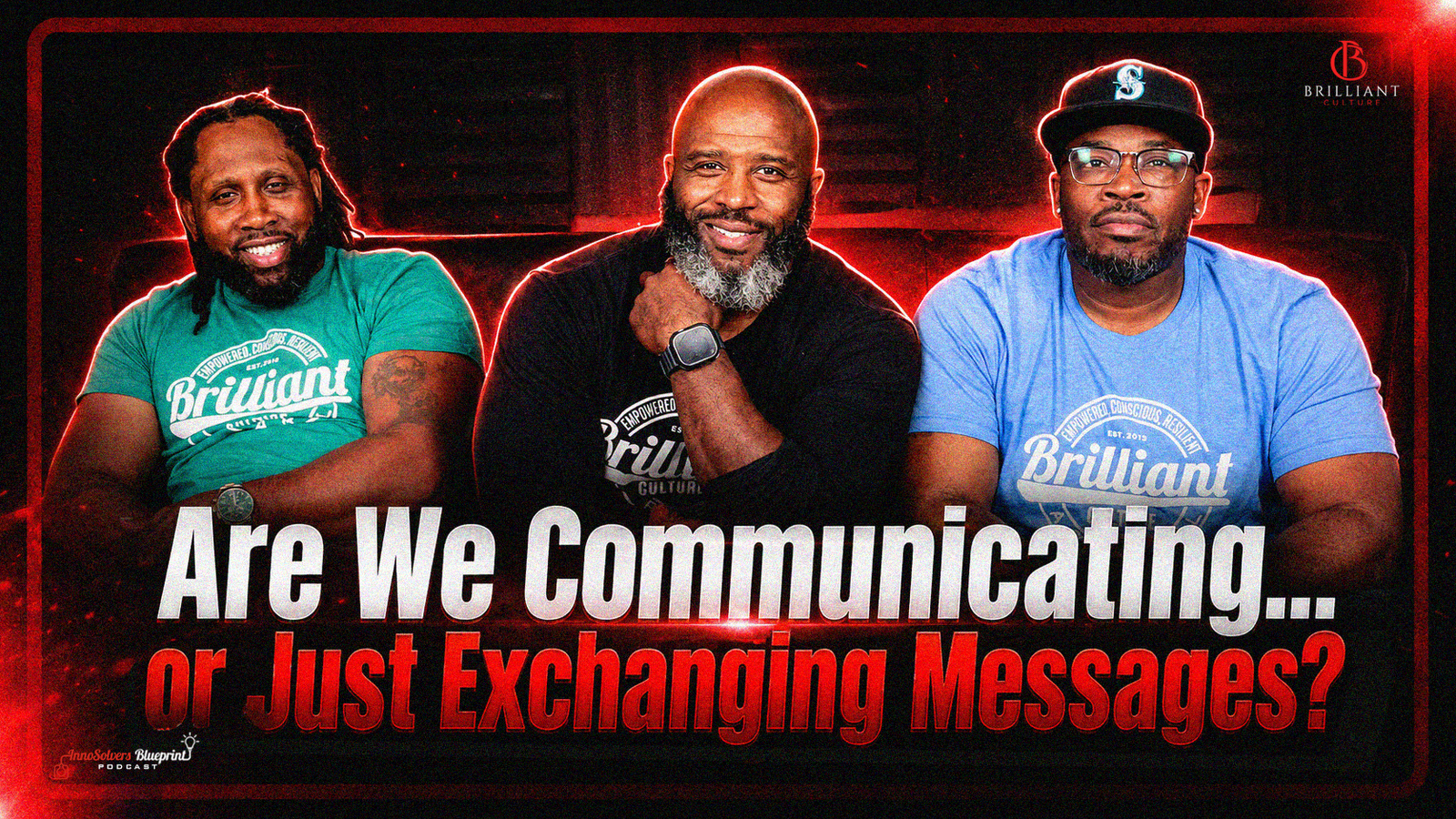
But exchanging more messages does not necessarily mean we are communicating better. Speed and convenience can create the illusion that because information has been sent, understanding has occurred. In Episode 11 of The InnoSolvers Blueprint Podcast, Are We Communicating… or Just Exchanging Messages?, we explore what can get lost when conversations move from faces and voices to screens and notifications, and why choosing the right form of communication can sometimes matter as much as choosing the right words.
More Communication Does Not Always Mean More Understanding
A person might exchange dozens of messages before arriving at work, participate in multiple group chats throughout the day, answer emails, respond to comments, send voice notes, and continue texting friends and family into the evening. From one perspective, we are constantly communicating.
Quantity, however, does not guarantee quality. Many of these exchanges are designed for speed and efficiency rather than depth. A quick message can successfully answer a simple question, confirm a time, provide an update, or share information. Problems arise when we expect the same communication tools to handle every type of conversation equally well.
Relationships require more than the transfer of information. People also communicate emotion, intention, hesitation, concern, humor, frustration, affection, and uncertainty. Much of that meaning may never appear explicitly in the words themselves. When those signals disappear, the person receiving the message is left to interpret what remains.
When the Message Loses Part of Its Meaning
Face to face conversations provide information beyond the words being spoken. We hear changes in tone and volume, notice facial expressions and body language, observe pauses, and respond to subtle changes in another person’s reaction. Even a phone conversation provides vocal cues that can help us recognize whether someone is joking, irritated, excited, uncertain, or upset.
A text message strips away many of those signals. The words remain, but much of the context surrounding them disappears. That does not make texting ineffective. It simply means the person receiving the message may have less information available when interpreting what the sender intended.
Consider a message containing one word: “Okay.” Depending on the conversation, it could communicate agreement, frustration, disappointment, sarcasm, acceptance, impatience, or simple acknowledgment. The sender may believe the meaning is obvious because they know what they intended. The recipient sees only the word on the screen and whatever context they bring to it.
When information is missing, people naturally begin filling in the blanks. That is how a five word message can sometimes become a fifty minute misunderstanding.
We Do Not Just Read Messages, We Interpret Them
Every message is received through the experiences, expectations, emotions, and assumptions of the person reading it. If two people are already frustrated with each other, a neutral text may be interpreted negatively. If someone is worried about a relationship, a delayed response may feel more significant than the sender intended. A short answer written by someone rushing between meetings may appear dismissive to the person receiving it.
The sender controls the words but cannot completely control their interpretation. Without tone, expression, or an immediate opportunity to clarify, the recipient may assign meaning that was never intended.
Digital communication can also encourage rapid responses. Notifications create a sense of immediacy, and people may answer before fully considering what they want to say. A message written in frustration can be delivered instantly, giving emotion very little time to settle before becoming permanent words on someone else’s screen.
Recognizing this does not mean assuming every digital conversation will be misunderstood. It means remembering that communication involves both sending and receiving, and sometimes there is considerable distance between the two.

Sometimes the Problem Is Not the Message, It Is the Medium
When a digital conversation becomes confusing or tense, our first instinct may be to rewrite the message. We add another paragraph, clarify what we meant, send another text, and then another. Before long, both people are responding to increasingly long explanations while the original issue becomes harder to find.
At that point, the conversation may have outgrown the medium carrying it.
Texting works well for confirming dinner plans, sending an address, sharing an update, or asking a straightforward question. Email can be useful when information needs to be organized, documented, or reviewed later. Group chats can help families, friends, teams, and organizations coordinate efficiently.
A disagreement, emotionally sensitive conversation, complicated decision, relationship concern, or significant misunderstanding may require something richer. Hearing someone’s voice can restore information that disappeared in text. Video adds facial expressions and visual cues. Sitting across from someone allows both people to experience the conversation more completely.
The question is not simply “What did they say?” Sometimes the better question is “What might be missing from this conversation?”
Convenience Can Change How We Handle Difficult Conversations
Digital communication does more than change how quickly we communicate. It can also influence which conversations we are willing to have. Sending a message may feel easier than making a phone call or sitting across from someone, particularly when the subject is uncomfortable.
Sometimes that distance is helpful. Writing gives people time to organize their thoughts, choose their words carefully, and communicate something they may struggle to express verbally. In the right situation, written communication can create greater clarity.
But distance can also become a way of avoiding the discomfort that meaningful communication sometimes requires. Difficult conversations often involve hearing an unexpected response, noticing someone’s reaction, answering questions, and remaining present when things become uncomfortable. A screen makes it easier to control how much of that experience we encounter.
The most convenient communication method is not always the most effective one. Sometimes the additional effort required by a phone call or face to face conversation is exactly what gives an exchange the depth it needs.
Listening Is Still Part of Communication
Technology has changed the tools we use, but it has not changed the importance of listening. Misunderstanding becomes more likely when people are primarily waiting for an opportunity to respond rather than trying to understand what the other person means.
Digital conversations can make this particularly challenging because messages often arrive in fragments. We may begin constructing our response before the other person has finished sharing their thoughts. In group chats, several conversations may occur simultaneously. In email, we may focus on one sentence that bothers us while overlooking the larger point.
Intentional communication requires slowing down enough to consider meaning. That might involve asking a clarifying question instead of making an assumption, rereading a message before reacting, or recognizing when our interpretation is being influenced by frustration from an earlier conversation.
Listening through a screen looks different from listening in person, but the objective remains the same. The goal is not simply to receive words. It is to understand what another person is trying to communicate.

Different Generations May Bring Different Communication Expectations
Communication habits can also be shaped by the technologies people grew up using. Someone who spent much of their life relying on phone calls and face to face conversations may approach texting differently from someone who has communicated digitally since childhood. A younger person may see messaging as a natural environment for meaningful conversation, while an older person may prefer hearing a voice when discussing something important.
Neither approach is automatically right or wrong. The differences demonstrate how expectations can influence interpretation. One person may consider an unexpected phone call intrusive, while another views calling as a sign that the conversation matters. Someone may see a brief text response as completely normal, while another interprets it as dismissive.
Understanding those preferences can improve communication across generations, relationships, families, and workplaces. Effective communication is not always about insisting that other people use our preferred method. Sometimes it means finding the method that gives the conversation the best opportunity to succeed.
Know When the Conversation Has Outgrown the Screen
One of the most valuable communication skills in a digital world may be recognizing when it is time to switch formats. A conversation that begins simply can become more complicated as emotion, disagreement, or misunderstanding enters the exchange.
There is value in recognizing that moment. Moving from text to a phone call, from email to a meeting, or from a group chat to a private conversation can change the quality of the interaction. The issue may remain difficult, but both people gain access to more information that can help them understand each other.
Changing the medium is not an admission that digital communication has failed. It is an acknowledgment that different conversations require different tools.
Technology Should Expand Connection, Not Replace It
The answer to digital misunderstanding is not abandoning technology. Digital communication has expanded human connection in extraordinary ways. It allows people to maintain relationships across distance, access communities they may never encounter locally, collaborate across borders, and remain connected when physical presence is impossible.
The opportunity is to use those tools intentionally. A message can be efficient without being sufficient for every conversation. A phone call can provide emotional context that text cannot. Face to face interaction can communicate things that neither words nor emojis fully capture.
Better communication is not necessarily about communicating more often. It is about making choices that increase the likelihood that what we mean and what another person understands are reasonably close to one another.
The New Opportunity
We do not have to choose between digital communication and meaningful human connection. Technology can make communication faster and more accessible, while human judgment helps us determine when speed and convenience are enough and when a conversation requires something more.
That means considering the message, the relationship, the emotions involved, and the possibility of misunderstanding before deciding how to communicate. It means asking questions before making assumptions, listening for meaning rather than simply preparing a response, and recognizing when an exchange has become too complicated or important to remain confined to a screen.
Text when a text works. Call when hearing a voice matters. Sit down together when presence can communicate what words alone cannot. Exchanging messages has never been easier, but truly understanding one another still requires intention, attention, and sometimes the willingness to choose a better way to talk.
Continue the Conversation
Explore the full conversation in Episode 11 of The InnoSolvers Blueprint Podcast, Are We Communicating… or Just Exchanging Messages? The episode examines digital communication, texting, misunderstandings, generational communication styles, relationships, and the ways technology can both strengthen and complicate human connection. It also explores how we can become more intentional about not only what we communicate, but how we communicate it.
