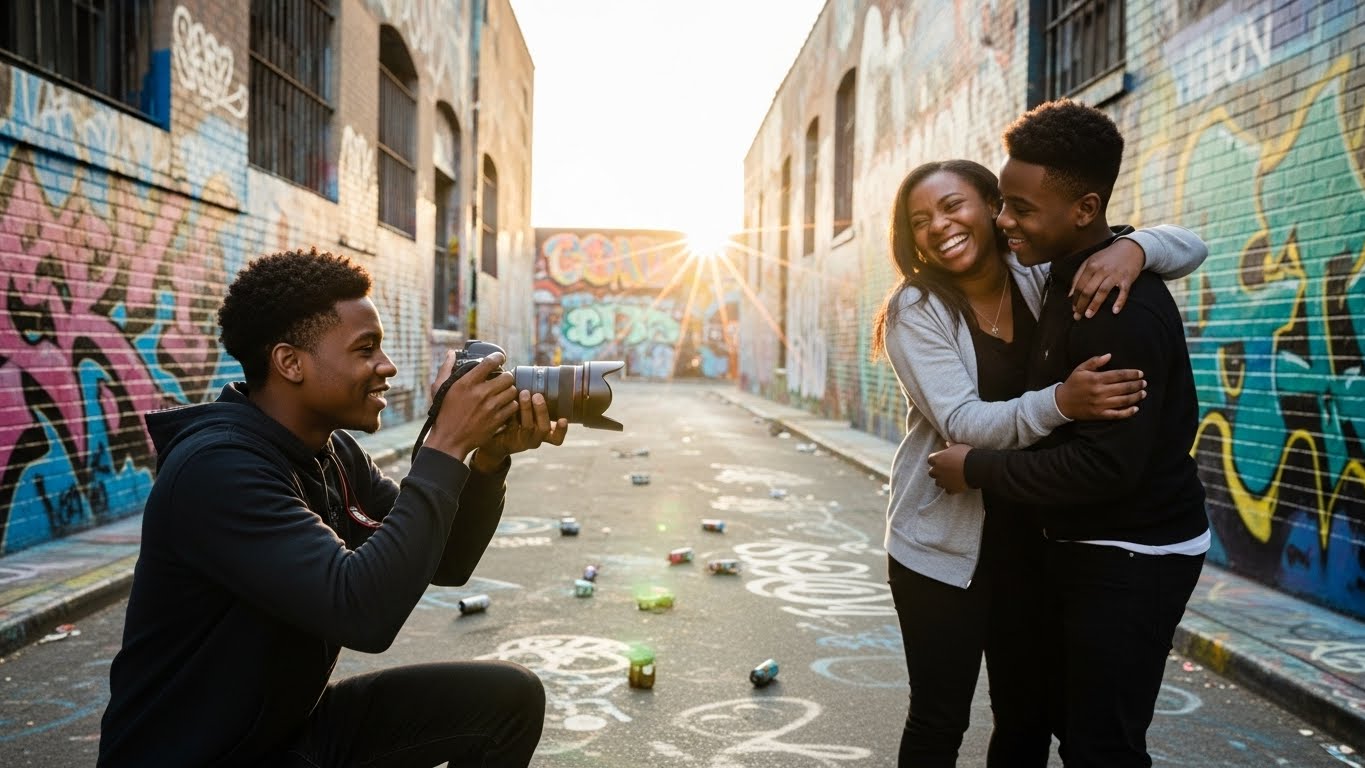
You see it everywhere—an image that stops your scrolling, a portrait that captures emotion so real you feel it. Photography today is not just about preserving moments; it is about telling stories that move people, challenge perspectives, and connect us across distance and difference. The camera has become one of the most powerful tools of communication in modern culture, and photographers are the visual storytellers of our time.
Storytelling is the foundation of connection. Whether told through words, actions, or images, stories shape how people see the world and themselves. Photography, in particular, transcends language. It speaks directly to emotion. One photo can convey what a thousand words cannot. It can shift a mindset, expose an injustice, or celebrate humanity in its rawest form. That is the power of a lens guided by purpose.

Contemporary photographers are redefining how we see and understand the world. Through documentary projects, they give voice to communities often overlooked. They reveal truths hidden in plain sight, inviting empathy rather than pity. A well-timed photograph from a war zone, a protest, or a rural village can bridge continents and inspire global dialogue. These photographers are not just observers; they are participants in the story of human experience. Their work reminds you that awareness is the first step toward change.
Then there are the conceptual photographers—the artists who turn ideas into visual poetry. Their images challenge norms, provoke thought, and expand imagination. Through creative staging, symbolism, and perspective, they transform abstract concepts like freedom, identity, or resilience into something tangible. They remind us that photography is not limited to documenting reality; it can also reshape it. In their hands, the camera becomes a mirror reflecting both society and self.
In the age of smartphones and social media, everyone has the ability to become a storyteller. But what separates the casual snapshot from a truly powerful image is intention. A great photograph is not about filters or perfect lighting; it is about awareness. It is about seeing deeply, noticing what others overlook, and framing it in a way that reveals meaning. When you take a photo with intention, you are not just capturing what is in front of you—you are interpreting what it represents.
Photography also serves as a form of personal reflection. Every image you take becomes part of your narrative, documenting growth, relationships, and moments of clarity. Whether you are a professional behind the lens or someone capturing family moments on your phone, your photos tell the story of your journey. They remind you that life is not a blur of days, but a collection of meaningful moments. The camera, in this sense, becomes a mindfulness tool—a way to slow down and truly see.
Photography is an instrument of empowerment. It allows people to reclaim their narratives and showcase their truth with dignity. For marginalized voices, photography is a platform of visibility and validation. For creators, it is a language of emotion and innovation. For leaders and entrepreneurs, it is a way to communicate vision and authenticity. In every context, photography connects purpose to perspective.
As technology evolves, the accessibility of visual storytelling continues to grow. Artificial intelligence and digital tools can enhance the craft, but they can never replace the human eye—the intuition, empathy, and emotion that give a photograph its soul. The most memorable images are not about perfection; they are about presence. They are about being fully aware of the story unfolding before you and honoring it through your art.

So the next time you hold a camera or even raise your phone, pause for a moment. Look closer. Ask yourself what story you want to tell. Photography is not just about seeing—it is about understanding. When you use your lens with purpose, you are not just taking a picture. You are shaping perception, sparking conversation, and adding your voice to the world’s collective story. That is the true brilliance of photography. It is not just art. It is impact.