


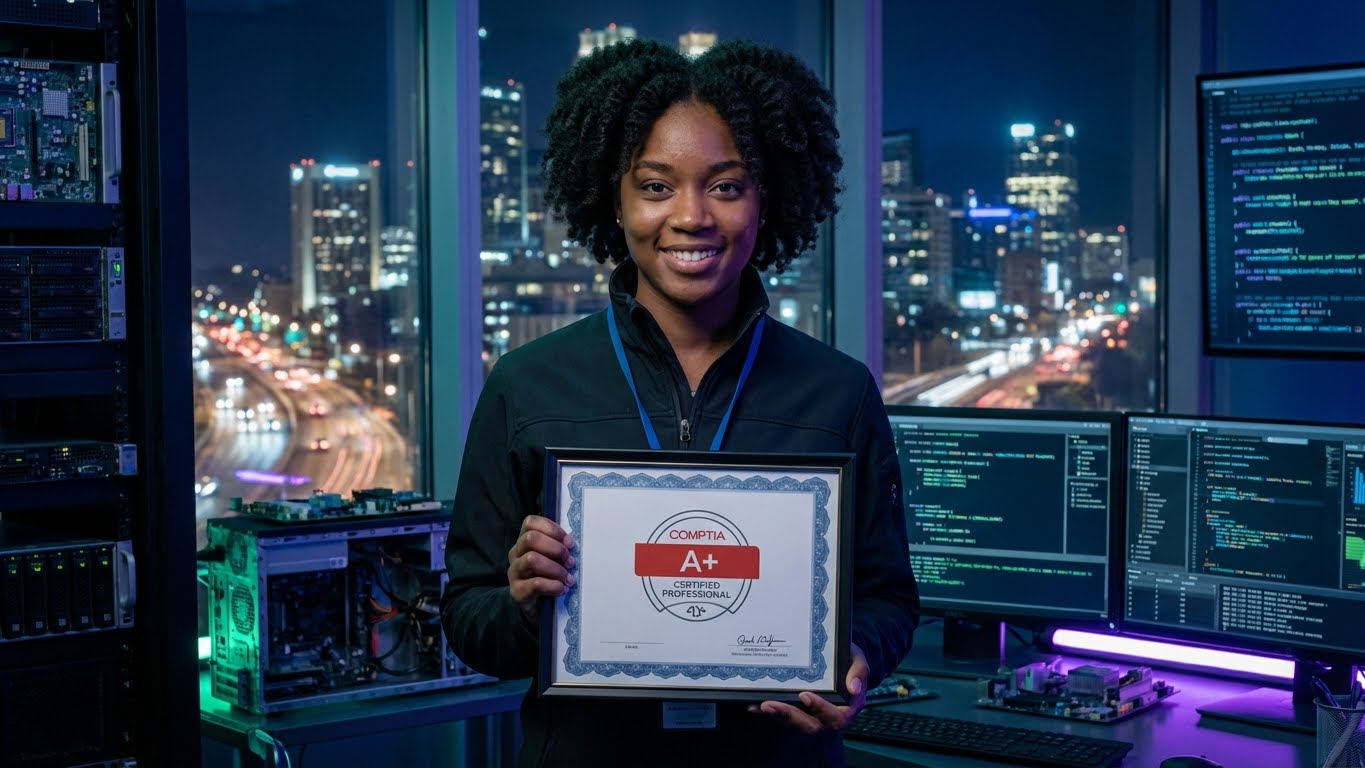
You are living in a time when the definition of success is being rewritten before your eyes. The traditional path—degree, job, promotion, retirement—has begun to unravel, replaced by something more fluid, agile, and skill-focused. In this new landscape, your value is not determined by the name on your diploma, but by your ability to adapt, learn, and apply knowledge in real time.
At Brilliant Culture, we see this as the rise of the skilled strategist. These are professionals who view learning not as a one-time investment but as an evolving strategy. They leverage technical certifications and micro-credentials to stay relevant, expand their influence, and lead in industries that demand both speed and precision.

Credentials in a Changing Economy
In a world shaped by constant technological advancement, the shelf life of knowledge has never been shorter. Employers are no longer asking only where you studied; they want to know what you can do right now. This shift has elevated certifications and micro-credentials from resume boosters to strategic assets.
Platforms like Coursera, Google Career Certificates, and LinkedIn Learning are democratizing access to technical education. They allow you to learn specific, high-demand skills—data analytics, project management, cybersecurity, AI applications—without the time or cost of a traditional degree. Companies such as IBM, Microsoft, and Amazon are even developing their own certification ecosystems, aligning learning directly with workforce needs.

The message is clear: in today’s economy, agility outperforms pedigree. The professionals who thrive are those who approach education as a continuous loop rather than a closed chapter.
From Learner to Strategist
Earning a certification is not just about acquiring a skill; it is about signaling strategic intent. You are telling employers and colleagues that you understand how the game is changing—and that you are not waiting to be left behind.
Certifications are also redefining mobility. A project manager can pivot into data analytics, an educator can transition into instructional design, a marketer can specialize in digital automation. The barriers between industries are softening because skills are becoming the new currency of opportunity.

At Brilliant Culture, we believe this shift represents a deeper cultural evolution. It is not just about training; it is about transformation. Each certification is a building block in the architecture of lifelong learning, empowering you to align your professional growth with purpose and impact.
What Organizations Are Learning
Forward-thinking companies are recognizing that the old hiring models no longer fit the pace of innovation. They are revising job descriptions to focus on competencies rather than credentials. They are developing internal learning academies, creating skill taxonomies, and rewarding employees who pursue certifications that support organizational growth.
This approach does more than close skill gaps—it strengthens engagement. When people see a clear path to advancement through targeted learning, they feel invested in the company’s future. Certification programs, when integrated into workforce strategy, become engines of both empowerment and retention.

However, this evolution requires thoughtful implementation. Not all certifications hold equal value. Leaders must evaluate programs based on rigor, relevance, and recognition. The goal is not to collect badges but to cultivate depth, mastery, and adaptability across teams.
The New Leadership Mindset
As the labor market evolves, so must leadership. You are now called to view your career as a living ecosystem—one that grows through curiosity, experimentation, and renewal. The most successful professionals will be those who see learning not as a requirement but as a privilege.
Micro-credentials and certifications are giving rise to a workforce that is more empowered, specialized, and entrepreneurial. They are bridging education and employment in a way that values skill over status, action over aspiration.

At Brilliant Culture, we see this as more than a workforce trend—it is a mindset revolution. The skilled strategist is not defined by their title, but by their adaptability, creativity, and courage to evolve.
The future belongs to those who are willing to learn faster than the world changes. Whether you are leading a team, building a business, or navigating a career pivot, your next opportunity will not come from waiting. It will come from preparing.
And preparation begins with one question: What will you learn next?
