



You have seen it unfold across every industry—the new wave of professionals who did not take the traditional path. They are not waiting for a diploma to define their value. They are learning faster, adapting quicker, and outperforming those who once seemed untouchable. The rise of the tech-driven learner has reshaped how organizations view talent. In today’s economy, skills are currency, and the ability to learn continuously has become the most valuable investment you can make.

At Brilliant Culture, we believe success in the modern workforce is not determined by credentials alone—it is driven by curiosity, adaptability, and application. The new definition of success belongs to those who learn, unlearn, and relearn with speed and intention. Online technical bootcamps and digital learning platforms have become the proving grounds for a new generation of achievers. They are producing agile thinkers who can solve problems in real time, pivot with technology, and deliver measurable impact.
The traditional degree once served as a universal marker of readiness. Today, employers are rethinking that assumption. They no longer ask only, “Where did you study?” They ask, “What can you do?” In an environment shaped by rapid digital transformation, the shelf life of knowledge is shorter than ever. Companies are prioritizing adaptability over pedigree. Fast-learners who master relevant technologies—data analytics, coding, cybersecurity, AI integration—are outperforming peers who rely solely on academic credentials. They bring the mindset of iteration rather than stagnation.

This shift is not an indictment of higher education but a reflection of a changing world. Bootcamps and micro-credential programs are designed to meet modern demands: condensed timelines, project-based learning, and immediate application. They emphasize doing, not just knowing. Learners emerge not only with skills but with confidence—the kind built from real-world execution. They can enter the workforce ready to contribute from day one, while traditional graduates often require additional training to bridge theory and practice.
The data reinforces this evolution. Employers increasingly report higher satisfaction with candidates who come from skill-based programs because they possess both technical fluency and self-motivation. Their success is measured not by time spent in classrooms but by output, creativity, and impact. These professionals represent the spirit of Brilliant Culture—driven, resourceful, and purpose-led. They understand that learning is not a destination but a continuous cycle of evolution.
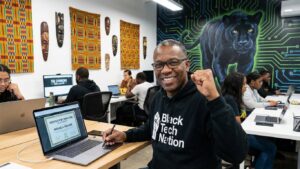
Within this new paradigm, performance metrics are shifting. It is no longer about the letters behind your name but the results you deliver. The best performers are those who can interpret data, adapt systems, and anticipate emerging trends before they happen. They bring a solutions-oriented mindset that thrives on experimentation and collaboration. Their edge comes from curiosity, not credentials.
As automation and artificial intelligence continue to redefine industries, your ability to learn new tools will define your resilience. The workforce of the future is fluid, and the leaders who will thrive are those who stay teachable. Bootcamps and online academies have democratized access to opportunity, enabling anyone with ambition and discipline to compete on skill rather than status. That shift levels the playing field and fuels innovation across all sectors.

For you, the lesson is clear. Your growth depends on your willingness to stay ahead of the curve. Seek programs that challenge your assumptions. Learn technologies that intersect with your field. Develop the habit of re-skilling as naturally as breathing. In doing so, you future-proof your career against change rather than fearing it. The new measure of professional excellence is not how much you know but how quickly you can learn, apply, and evolve.
The philosophy of Brilliant Culture teaches that mastery is not static—it is iterative. Each new skill becomes a stepping stone to greater purpose and performance. When you embrace lifelong learning, you unlock a competitive advantage that no degree alone can offer.

The world no longer rewards those who wait for validation. It rewards those who create it. The professionals leading the new workforce are not just keeping up with technology—they are defining it. They are rewriting the rules of success by showing that what matters most is not where you started, but how far you are willing to grow. In this era, your mindset is your greatest credential—and your ability to adapt is your greatest form of brilliance.
